Video production is often considered to be "yet another thing" that authors have to jump through to get published. And it is true: video production is not universally needed and claiming that every paper needs a video distorts what the video material should accomplish. My papers need videos as the visual components to the software products are critical and showcasing how a software performs in practice and even how something is structurally setup is important for both reviewers and reproducibility.
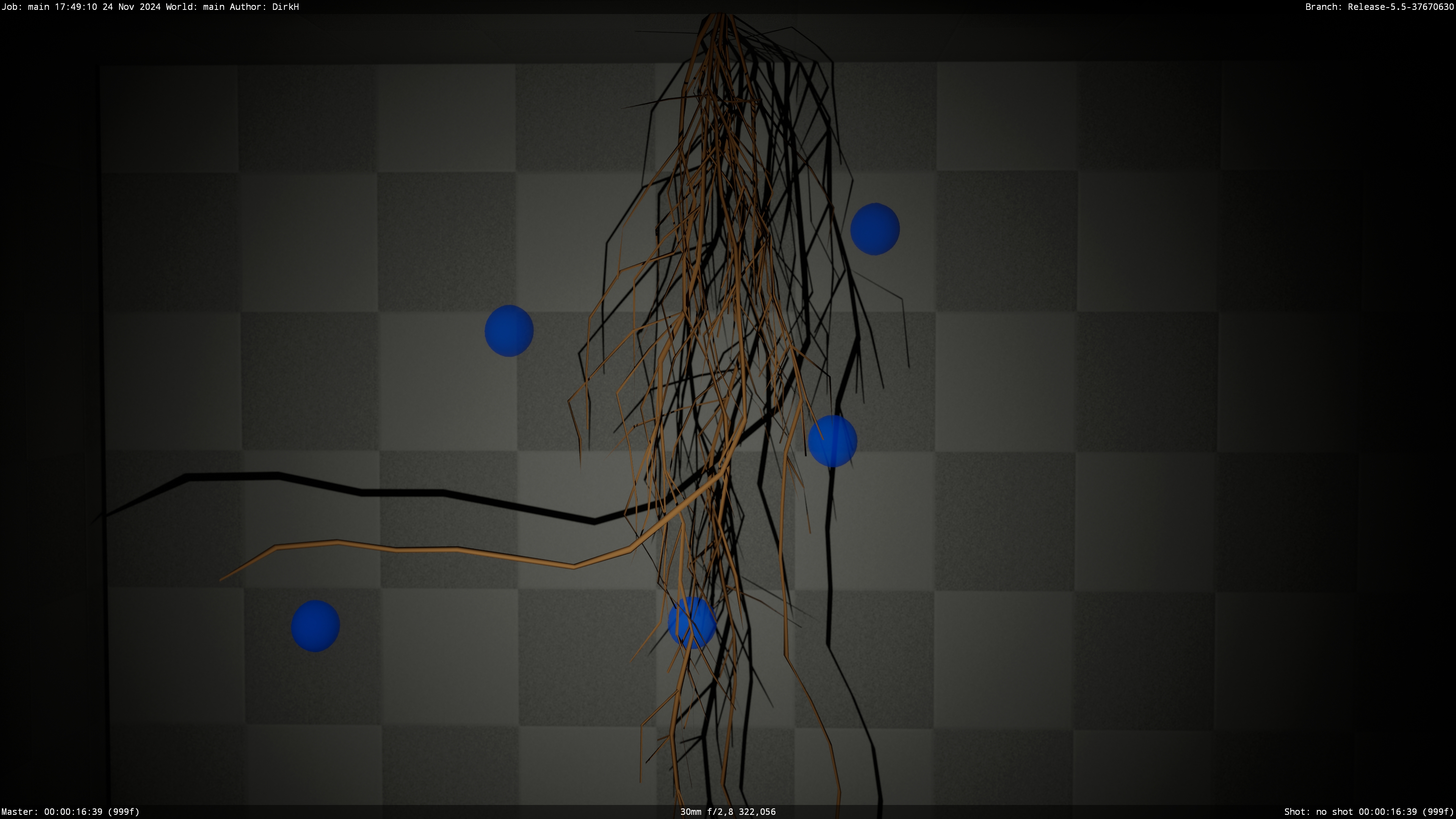
My video setup is essentially a separate project in Unreal Engine which uses imported data from the actual research pipelines. The reason for this is that even if my videos are not as high quality as they could be if a professional looked at them, they do still contain some motion design.
Video Project
The video project is a motion design project which uses a separate Unreal Engine pipeline and is thus not necessarily bound to the same version of the research project. However, typically I use the same version for both projects, seeing as the feature set of the UE version is important for the paper.

The video project will usually revolve around "Levels" which contain the animated information. The geometric content of the scene is exported data from the research project. The background as to why certain aspects of the research project are incompatible with producing videos is centered around the following points.
Feature Set
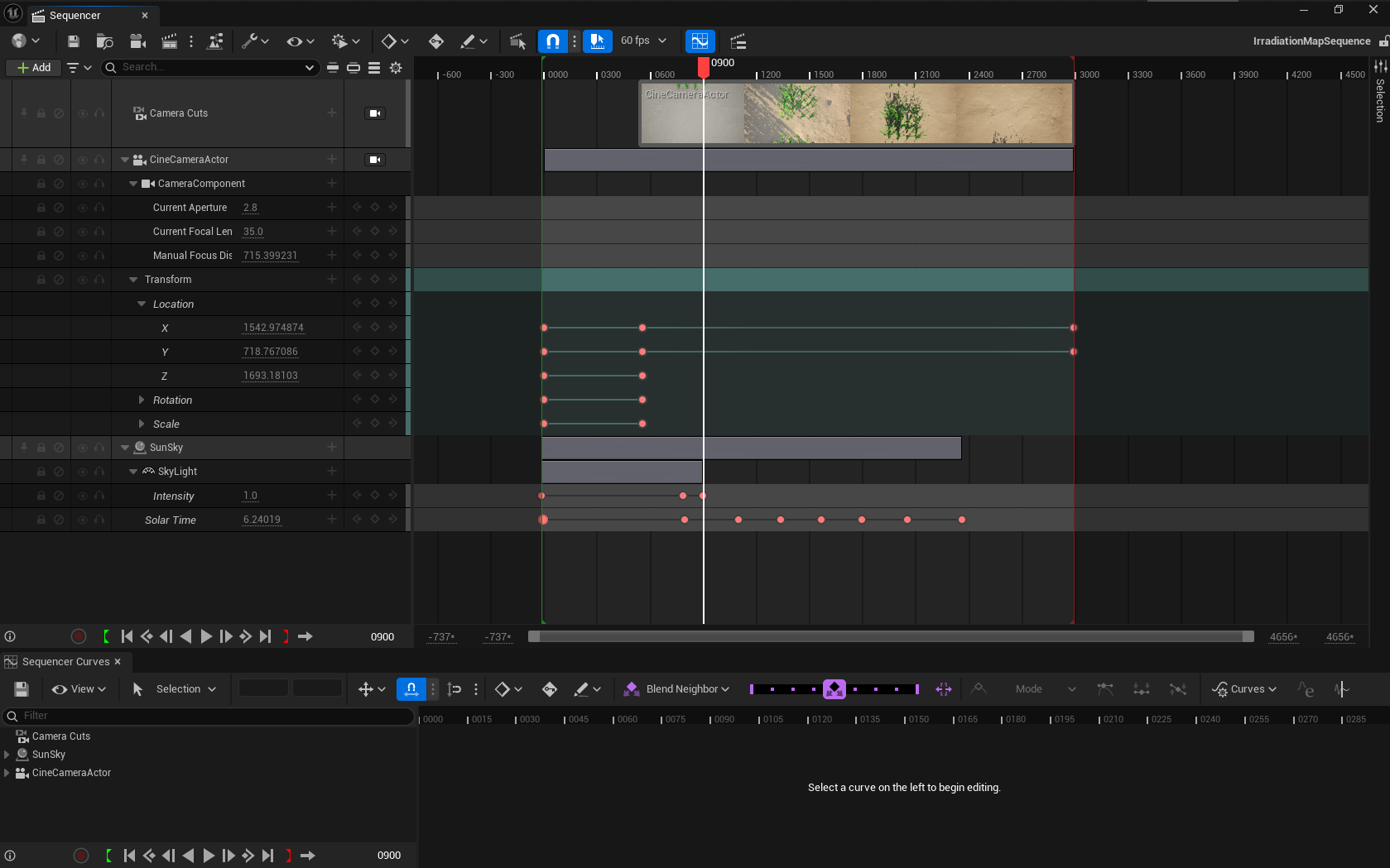
We are using statically altered scenes for the purpose of illustration. Some aspects of the scene in these videos will for example run faster, such as the day/night cycle. The animated nature of this allows us to play the same information content as a video rather than a set of screenshots.
Unreal Engine also offers a bunch of motion design features, which we would not be able to use for the synthetic data project - it uses completely different pipelines. For example, the camera movement is animated using Unreal Engine's Sequencer tool, which allows for keyframing and smooth transitions. In Synavis, the camera is controlled programmatically and while there is movement and animation going on, it is streaming based and erratic to allow for a wide range of views.
Rendering
The rendering of the video project is stylized to some extend. This is because information can be conveyed much better using cinematic-style rendering. For example, the scene lighting is set up like sunlight would be for a real camera, even if the scene displayed is the model scene containing PAR radiation calibration.
Furthermore it is also important to have some agency over the camera settings in a very direct manner. For the synthetic data replication, camera settings either need to be varied or have specific values. They are not optimized, as I do in the video, for visual clarity or aesthetic appeal. I also do small tricks with the rendering, such as showing what a camera sees on the camera mesh, and including this camera mesh to begin with. It is not easy to produce these videos, either, as people tend to not have any opinions about video material when I ask about it.
Straight up graphic design
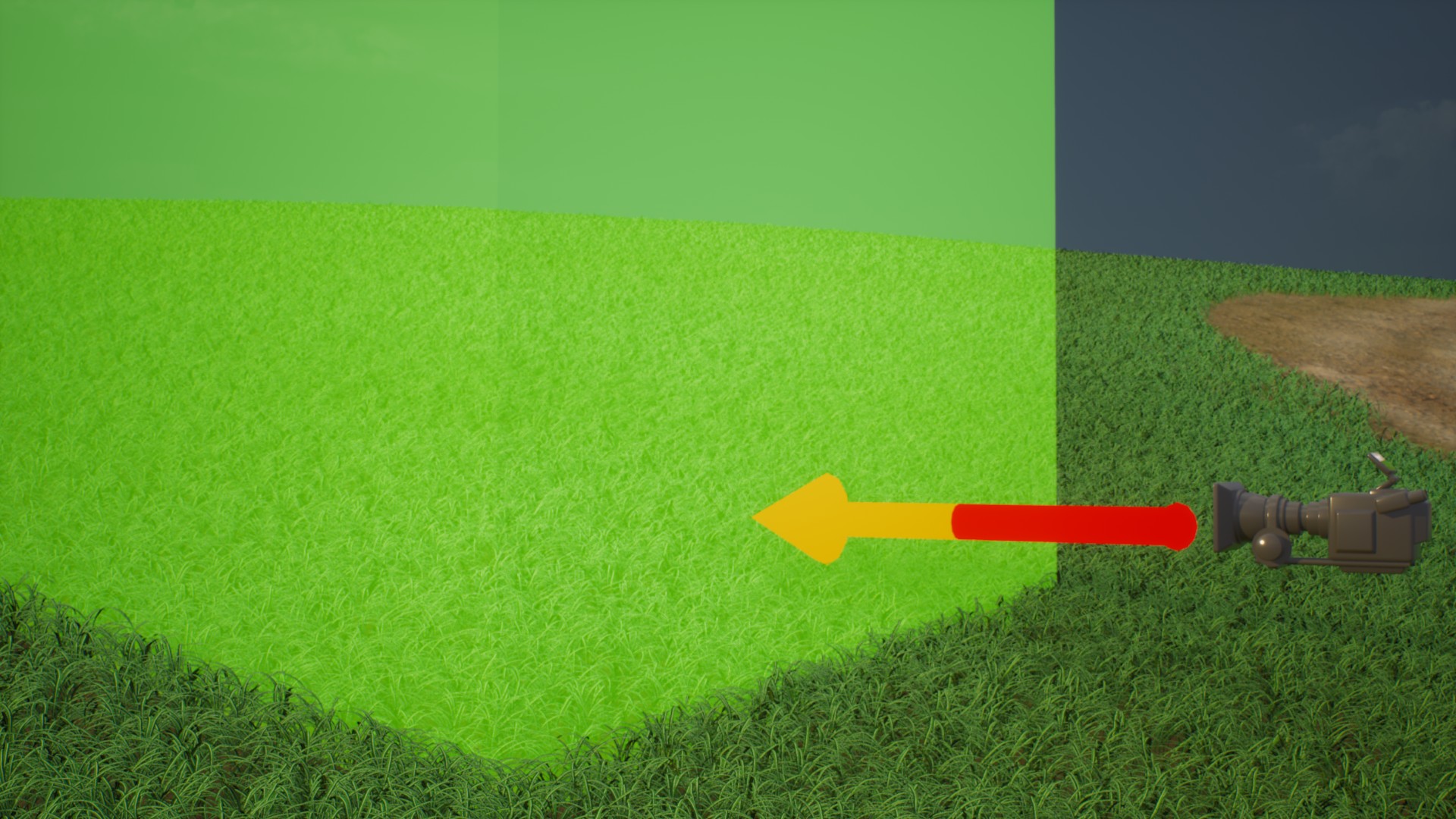
The scene at the start of this page shows a plant root taking up water which is visualized by a floating bubble suspended in mid air. This is purely for demonstration of what the model does. It is also not entirely necessary to understand the paper. However, it does make the video more engaging and easier to follow. The same goes for the parallelization visualization which highlights the buffer geometries using a semi-transparent box.
Take-Away: Video or no Video
If you do something with visualization, Virtual Reality, or similar, it would probably be almost mandatory to provide a video for the paper, particularly when submitting to a conference. When I review papers from that field, I do check out the video.
However, it is also definitely true that not many people actually watch these. I do definitely know that, seeing as more people tend to read the paper than watch the video, as exemplified by the number of views on my YouTube channel. This is not a problem, as the video is not meant to be a replacement for the paper, but rather an additional resource to help understand the content. This is furthermore not for everybody, but if it helps a selected few individuals, it is worth it.